Hedreich Nichols

Teachers

Uptown Girl

Small Bites Friday Five 09-18-20:

PE – Read this article that talks about a Black American PE teacher talking, much like me tonight, about her privilege.  Then reflect with your students on how— and why— privilege affects the opportunity to play, or even watch sports.

Math – Investigate this overview on how to “find an issue that fits the math, not the other way around”, from Radical Math.

ELL – Tolerance.org for the win again with ELL/ESL lessons on identity exploration.

ELA – Watch this Ted video from the passionate, ‘articulate’, spoken word “tri-tongued” artist, Jamila Lyiscott to get perspective on the different ways we English. Then reflect with your students on the different ways we talk to different audiences.

STEM Get the curriculum from the underrepresentation project designed to examine and address inequities and inclusion in science.

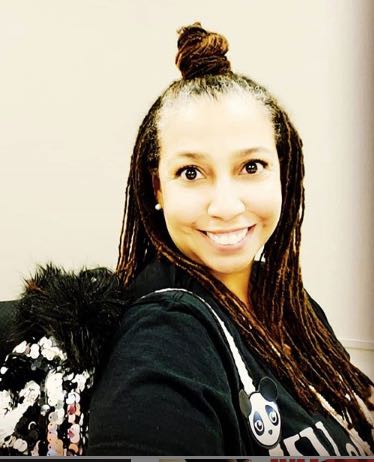
My son and I have a family culture of helping. We volunteer, help out at missions and food banks, build houses (him, not me), work telephone banks (me not him) and do other things that are all about serving others. That’s important to us and it goes back for generations, if the stories my great grandmother told are to be believed.

We are able to do those things because we are privileged. Not a lot of little girls from my South Park neighborhood in Houston grew up and spent half their adult life in the Alps teaching and performing. Living in the middle of Europe as a Black musician, I was privileged to know life as an American, not a hyphen-American. That privilege and the achievement that comes along with it, has given me blind spots. My talent made room for me. My mother’s reputation as a singer and composer opened doors for me. I may have worked hard to make something of all that, but I earned none of it.

My son has inherited that privilege and then some. He is a generous spirited human who allows his momma to tell his stories. Even in his generosity, he has blind spots. So do I, and my guess is, if you are here, you do too.

This year, we can’t afford to ignore our blind spots. We can assume nothing. We talk about devices and meal service for our students, but do we really know if they are hungry? Are they are sharing a phone at a cousin’s house to do assignments? Are they not answering emails because they lost their home and phone service?

As you read this article, I am simply asking that you remember, your normal may not be everyone’s. Your students may have needs that you could never imagine. “No, everyone has not gone to the orchestra, son”. And no, every one of your kids may not have even their most basic needs met.

As you go through this year, pay special attention. If you sense a need, see how you might help. Find the services in your area that your students might need or get together with a group of friends to provide your own set of resources.

Yes, we are taxed beyond measure this year, but remember your why. One less grade in the gradebook won’t make a difference, but the time you take to notice and help fulfill a child’s basic needs will.
Uptown Girl Read More »

What’s Going On

While being interviewed this week for Ted Nesloney’s #tellyourstory series, we talked a little about equity. He mentioned, rightly so, that the word equity is kind of “buzzy”, meaning that it’s one of the words popularly thrown around in education these days. He asked me what equity means to me. My encapsulated reply is that equity means doing the very best you can do for the student standing right in front of you.

When we think of the Big Concepts surrounding equity, it’s easy to be overwhelmed. Be a culturally responsive educator. Decolonize your classroom. Teach anti-racist curriculum. Where do you start? How do you start? How do you eat an elephant? One bite at a time. How do you begin to make your corner of the world a more equitable place as an educator? By doing the best for the one student standing in front of you.

Let me be clear: systemic racism is a big problem in the US and across the world and this week we have seen it play out in ugly ways in our country, once again. However, seeing the problem, acknowledging the problem, being aware of the symptoms and solutions of the problem and maybe even seeing your own part in the problem is not going to change anything unless you do one thing: Do your very best for the student standing in front of you. A child standing in front of you needs to know 3 things:

  • You value all students;
  • Every student deserves to be valued;
  • If someone is not valued, you will use your voice to help make sure that they are.

If every teacher would model and teach those three things, we could stop defining terms that essentially all mean the same thing: value others just as you value yourself (if you’re so inclined, you may recognize this as one of the 10 commandments). If every teacher had been teaching those three things, Amy Cooper might have grown up to be a person who leashed her dog instead of pulling the Fear Of The Black Man card. If teachers had been teaching students to value others all along, George Floyd would likely still be alive.

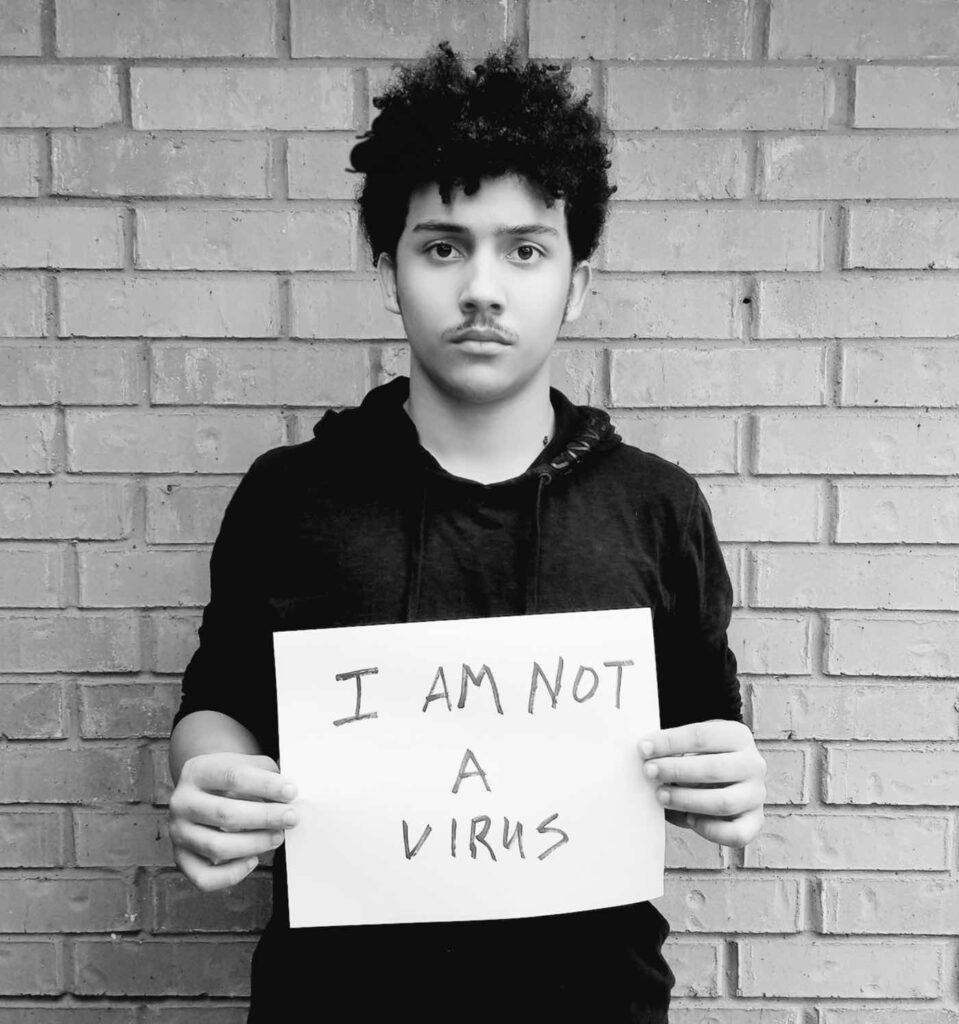
If every teacher would do the best for each child in front of them by valuing all students and speaking out against those who don’t, I wouldn’t have to worry about my teenager driving/running/living while black. That’s a hashtag, you know, #livingwhileblack. My pride and joy, a well-liked 16 year-old kid, who is now taller than I am, is perceived by the world as a black man, and we see what happens to black men, even when they are Harvard educated birders or lying faced down, pleading for breath as a peace officer’s knee crushes the life out of them.

Educators, if you are reading this and thinking that my recipe for eradicating racism is overly simple, I’ll concede that. I just don’t understand why it can’t be.

As a teacher, how can I not use my voice to speak out against wrong and teach my students to do the same? How can I not understand that melanin can mean convictions and rogue justice death sentences, often without vindication? How can I not understand that #blacklivesmatter means that students in your class, who look like me, don’t feel like their lives matter as much as the lives of whites because of what we experience and what we see happening in our communities.

As an educator, how can you not want to hug them and protect them and make sure that everyone who does NOT look like them knows that it’s not ok that they feel that way. It’s not ok that they die early and often for reasons rooted in systemic disenfranchisement, reasons that should make every educator into an activist, even if it’s only for one child at a time.

You want a more equitable classroom? Do your very best for the student standing in front of you. Make your campus a place where fairness and justice are not regulated by race, class, ideology or popularity. Esteem and celebrate those whose stories and histories you may have to look beyond the textbook for. When you read the painful stories of those who are not being valued, don’t look away. Teach your students the truth about what happens to people of color and the ugly historical truths surrounding the ugly present realities. Then teach them that they can make a difference. Send cards and letters to mothers of the slain, work with organizations who fight for social justice and teach your students that the grief we feel today will lessen if they value those who look like them– and those who don’t.

Don’t worry about the Big Concepts surrounding equity. Just do your best for the student that’s standing in front of you.

What’s Going On Read More »

I Am What I AM

Every year sees it’s academic superstars, those students who are focused, organized and gifted at the nuts and bolts of learning in a classroom setting. There must have been something in the water in 2008 because I am seeing some phenomenal 11 year olds. I appreciate all of my kids for their own unique strengths, but these kids have my admiration for a different reason. I want to be them when I grow up. Of course, in my 14th year in education, I should consider myself a grown-up. And I’m pretty sure I am, in all of the important ways. But while I am darn good at adulting, I have not yet stopped aspiring to be more grown-up. I am the teacher who turns in lesson plans on time, keeps a (mostly) neat desk, and I could pass a gradebook check on any given day. But I was not born this way. Third grade me spent many minutes nose-in-corner for having forgotten something—again. Or for having a messy backpack—again. Or for losing a paper—again. Of course third grade me in today’s school system would have been given “paperwork”, an IEP, or a 504, and a cool nickname like 2e. But it was a different time. I was a gifted student but “absent-minded” and would have “lost my head if it wasn’t attached”, as I so often heard. Since we are always really just bigger, (hopefully) more capable versions of our 3rd grade selves, I look at my superstars in the room and see my own growth potential. When Amerie was asked how she managed to write in her planner and complete her warm-up consistently every day before most kids had even pulled out their pencils, her answer was simple. “I don’t entertain foolishness”. Drop mic. GEEZ, I want that focus!

My computer lab,
my student’s shiny backpack and edge gel!

Every morning, forty minutes before class begins, I park and say hello to the librarian as she and her daughter pull in. I can tell she was Amie when she was a kid. She moves towards the school while I wish the back of her head a nice day and rummage through the back seat to pick one of 5 pairs of shoes that will match my outfit AND not have me limping out of school today. I walk toward campus, stopping briefly to mention the climate action my 7th graders are working on to the campus officer who leaves his motor running the whole 45 minutes he’s there. Shaking my head, I start off again towards the school building. In the distance I see the librarian already entering the building as I hug my kid goodbye before he goes off to his side of campus. Then I stop to ask Ms. Willis something about Fall Festival because, well, sometimes a conversation is so much better than an email. On my way to the MS building once again, I stop quickly to remind a student that he needs to come to tutoring. Finally inside the building, with 25 minutes to go, I say hello to the Spanish teacher in my new Duo Lingo Spanish, and beam at her compliments about my current ability to use lifesaving phrases like El Español es muy divertido. While I’m there we share a concern about a student because, as you know, a conversation is so much better than an email. Once again I head toward my room but remember to stop in to the Special Education department to set up a meeting about something. It’ll only take a sec. While I’m there, I say hi to Dobby, the pet bearded dragon who smiles at me when he hears my voice. No really, he does. I head to my room while greeting another two teachers, but this time I keep it moving. Class starts in 18 minutes and I still have fairy lights, lamps and a slow computer-projector combo to boot up. I finally make it to my class, get everything turned on and wonder why I don’t have time to run to the powder room before class. And why my coffee is cold. And why I didn’t get to change the date on the board. I got here 40 minutes early, after all. I am obviously not Amerie. Or Ollie, Figgy or Denny or any of the 11 year old superstars I am privileged to teach. I remind myself, however, that who I am is who I’m meant to be, in all my imperfection. We teachers sometimes forget that our schools don’t need perfect teachers, just teachers perfectly willing and ready to inspire learning.

If you know teachers who have forgotten this important truth, tag them and remind them.

I Am What I AM Read More »