Hedreich Nichols

covid19

Shape of You

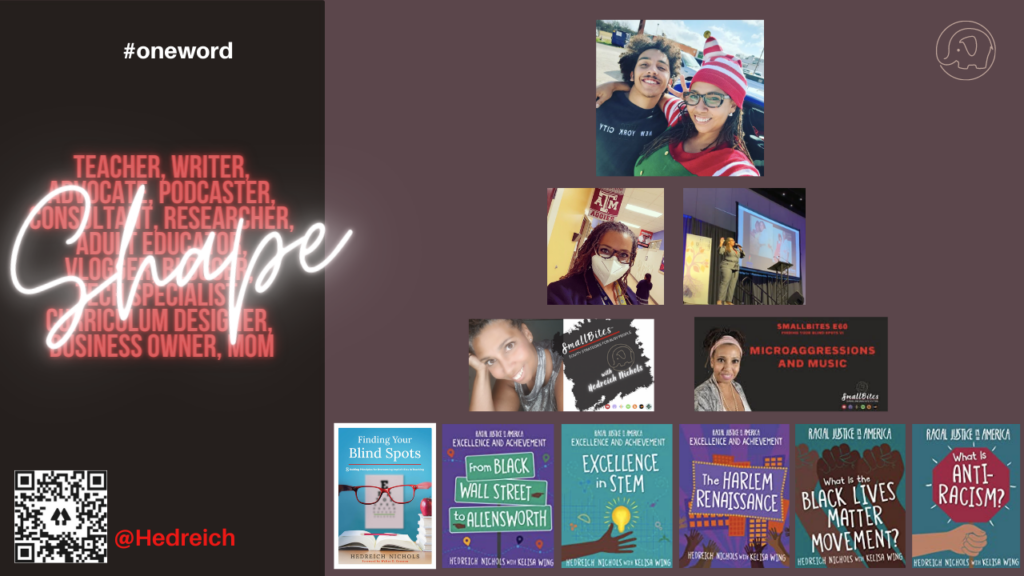
OneWord ’22 graphic. SmallBites returns Monday, January 10th wherever fine podcasts are heard.

Standing at the precipice of the new year has long ceased to feel like some magical new beginning. That’s a good thing. I have not bungled this year. I’m not waiting on the turn of a page so that I can resolutely start anew. What I am doing is taking the wins of the last couple of years and shaping them into a harmonious melding of many hats. If you are a teacher and a parent, you understand being a wearer of many hats.

The thing about wearing many hats is that it can be difficult to identify which hat is The One. Usually that’s because there is no ONE. Could you choose between ‘child’, ‘spouse’, ‘parent’, ‘educator’ or ‘friend’? Each of those hats are vitally important, but they aren’t always on your head all at once. Still, sometimes you stack them, sometimes they sit askew. Sometimes you just want to throw them all down and go hatless.

This evening, as I write the last blog of 2021, I am hatless. It’s one of those rare moments where I can just be. And in this moment, I savor the time to reflect in quiet about my many hats.

Shape Shifter

A template designed by Educator and Youtuber Claudio Zavala led me to define the hats I wear. As I named them, I finalized my one word, ‘shape’. As my role in education and parenting is shifting, I am in the process of reordering my hats. The last two years have been fruitful, yielding 6 books, 65 SmallBites YouTube episodes, 65 hedreich.com blog episodes and 65 SmallBites podcast episodes. Those don’t include courses, guest blogs and articles.

So how do I bring all those hats under one umbrella? Well, that’s my focus this year. A little prioritizing, a little fine tuning the schedule and a little more work-life balance. And this is all worthy of a blog post, why? Because, as usual, I have an ask. In the next few days, I would like each of you multi hat wearers to spend a little time being intentional about which hats need to be worn when, for how long and in what order. By allowing a picture of your priorities to emerge, you’ll be better able to focus on the now and shape your path forward. This is especially true if you are, like many, considering a shift away from the classroom or away from education altogether.

Happy New Year

As you define and re-order your hats, define also what brings you joy, what ameliorates stress and what is good for you. Make choosing yourself a firm priority. All the people around you will be happier if you are balanced and content. How will you do this with the coming year, including COVID and testing season? Only you can say. But I know that if you don’t take a minute to establish your priorities, the year’s stressors will do it for you and you will likely not be pleased with the outcome.

FInally, I’d like to thank you for reading and listening. I hope that by shaping your coming year and beyond, that you’ll continue to have energy to learn, to grow and to make safer, more equitable classrooms and campuses for all students.

Your loyalty is appreciated. See you next year!
Shape of You Read More »

To Tell the Old Old Story

Small Bites Friday Five 10-02-20:

20-30m – Watch this Facebook live video of Brené Brown talking about the importance of owning our stories so that we can write our own endings.

15-20m – Enrich your students’ learning with resources from Voices of a People’s History that include videos, lesson plans and a full teacher’s curriculum guide.

10-15m – Consider that the story of the US started in 1607 when the English claimed Jamestown, chasing Powhatan and his people from their own land and eventually decimating the population of 60+ million Americans already living in the area. While you’re at it, help me find good primary resources.

5-10m – Listen to this podcast on voter suppression tactics the FBI is currently warning about.

0-5m – Read this Time Magazine article about the denouncing of the 1619 curriculum and the push for patriotic education. As Joanne Freeman says, studying all perspectives is only dangerous if you have something to hide.

Every day this week there was something to tell. The FBI issuing warnings about voter suppression in the upcoming elections. Moves by state governments that make it harder to vote, especially for those who rely on public transportation or have time constraints. Embarrassment on the world stage about a presidential debacle masquerading as a presidential debate. The president flouting CDC guidelines, mocking mask wearers and landing in the hospital with COVID.

This week has played out like a stroll through the house of horrors with specters jumping out at us at every turn. Unfortunately these specters are no friendly ghosts, they are our reality. They distract and detract as we follow the news cycle rabbit hole. As we follow the newest stories, we neglect the old ones.

How good are we at owning our stories? Our personal failures? A conversation with a dear friend from New Orleans reminded me that we are often afraid to be who we were yesterday. Yes, so what if you or the people who raised you regularly referred to some folks as niggers? So what if you still have a big stars and bars flag in your garage that you can’t part with because it used to be on your granddaddy’s truck when y’all went muddin’?

Really, so what? Are you here reading this? If so, you probably think differently now than you did then. You probably feel a tinge of guilt about that flag and you may want to divorce yourself from anything that reminds you of the way you used to think or talk about others. Don’t do either.

Own your story. All of it.

The collective lack of owning our story in the US has led to loss of life, wealth and wellbeing, dividing and decimating communities since our inception. The lack of owning the story of COVID in this country is doing the same.

Owning our story does not show weakness, it shows strength. Controlling the narrative–not propagandizing it, but owning and controlling the whole of our story–allows us to sweep down the cobwebs, banish specters and move forward. As Brene Brown puts it, we can write our own ending.

As you chew on the stories of this week and wait anxiously on what could possibly come next, think about your stories. Think about our collective stories. Release guilt and shame and come to terms with the good, the bad, the ugly. Teach your students to do the same.

Learning the many stories that make up our history may at times be hard to hear, but the truth is certainly preferable to the weight of this constant, destructive delusion. Even children should be taught to love in spite of, not just because of.

Don’t be dissuaded from knowing the whole of our country’s story. Read about 1607, 1619 as well as 1492 and 1776. And while you’re at it, reflect on your own story and let go of any guilt or shame you may be carrying. While you may not want to hang Pawpaw’s flag up in the window, keep the good memories of the man who took you muddin’. Noone should be reduced to the worst of what they were; not him, not you, not our country.

What matters is that we decide to be better. Today.

To Tell the Old Old Story Read More »

A Little Less Talk and a Lot More Action

#SmallBites E3

Small Bites Friday Five 06-26-20:

20-30m – Set up a doc with contact info of https://www.usa.gov/elected-officials. Then create a basic “Dear Official” template. Use it often to quickly and efficiently let your voice be heard.

15-20m – Use Ballotpedia to find out when school board elections are and what’s at stake, then vote. Better yet, run for office or help support someone who will!

10-15m – Watch Uncomfortable Conversations with a Black Man from Emmanuel Acho.

5-10m – Remember last week’s conversation you had with a young person on race? This week talk with someone older than you. Again, don’t guide the conversation, just listen.

0-5m – Find an organization to support or donate to.

The recent protests and Covid19 have combined to spotlight inequities that have long plagued our country. People who don’t look like me are waking up to the reality that people who do look like me face daily. They are finding out that we are more likely to die early; in childbirth, of curable diseases, from violence. We make less money, hit glass ceilings before our less pigmented peers and are, as a community, experiencing the traumatic effects of the vestiges of enslavement, Jim Crow and systemic inequitable practices of the last 400 years.

People are beginning to have conversations about issues of racial inequities that are long overdue. I’m glad.

I’m also tired.

I am tired of big words and bigger concepts. How do I fight systemic racial discrimination and marginalization anyway? Do I use a sword? A pen? Expo Markers? A protest sign? How can I fight hate? With more trainings? With firings? With well-crafted laws? We’ve seen how well those work.

Yes, we need to talk, listen, have uncomfortable conversations. But if we are not taking some form of action while we are talking, listening and learning, we are getting smarter but not making an impact on students and communities. While you are reading the third chapter of White Fragility, a child is going hungry, a man is dying of preventable causes before he’s reached retirement and another top student is leaving an ivy league campus because the constant onslaught of microaggressions has started to affect her mental health (“Oh, you’re only here because of affirmative action, right?”).

Let me be clear, the talking, listening and learning are necessary. It’s just that they are not a precursor to action, not a phase that we complete before we go on to the action phase. The action phase has to happen now. If you’re not sure how to start, watch episode 3 of #Smallbites (and 1 and 2) to find out what you can do this week.

The world needs your voice, but it needs your hand to the plow too.

A Little Less Talk and a Lot More Action Read More »

Keep On Keeping On

Small Bites Friday Five 06-19-20:

20-30m – Google anti-racism or something simple like “how to be a more culturally responsive teacher”. Nothing beats finding your own rabbit hole to fall into.

15-20m – Google “HBCU”, pick one and then read about its rich history and even consider giving your support. Here’s one option.

10-15m – Read or watch a social justice story from your favorite news outlet then read or watch a story covering the same topic from your least trusted news source. Reflect on perspective vs. fact.

5-10m – Have a conversation with at least one child or teen about race in America. Don’t proselytize, just listen. Consider it a fact-finding mission.

0-5m – Read “Teaching as Activism, Teaching as Care” from tolerance.org.

Every January I start a new health and fitness routine. Like clockwork. And every March I start the slow slide into the next January when I have to start all over again. The excitement of a new chance to do something big is always a huge draw at the year’s beginning. So is the likelihood that it won’t stick. According to a University of Scranton study, only 19% of those resolutions are kept long term.

The current social awakening to systemic disenfranchisement of marginalized populations bears every hallmark of a January 1st new beginning. Outrage and the opportunity for sweeping change is fueling a movement around the world. But I wonder, what will change look like 2 months or even 2 years from now?

The truth is, as much as we want to say we’ll keep pushing for change, life happens. You will have to learn new tech to teach in a blended environment, figure out how to work out without your 5AM spin class, give your personal kids more learning support or find new childcare for a totally new routine.

It will get cold and you won’t want to stand outside at a rally. Christmas will come and you may face balancing taking the kids to see grandma with Covid 2nd wave health and safety concerns.

Life will happen and, unless racism is causing you personal pain or at least personal difficulty, you will re-prioritize. You won’t want to, you may not even mean to but you will—unless you have a plan.

Decide now what your priorities are. Are you a letter writer? Grant writer? Check writer? Are you a relationship builder, library collection builder, a content connection builder? Do you see yourself making a difference with one? With a few? With many? In your family? In your classroom? In politics and policy?

Where and how can you keep pushing change forward when life hits? Whatever you can see yourself doing, make a plan now to do it when it’s cold, uncomfortable, busy and 100th on a list of 150 things you need to have done yesterday. Put your supports in place and make a plan to do it even when your best laid plan has gone wrong or made you the object of constant “oh-here-she-comes” eye-rolls.

Make a plan because when the protests stop, the real work will just be starting. Small Bites can be your go to. But even if it’s not, find one thing you can do even in the busiest of times because we can’t afford to lose one voice. We can’t afford to lose your voice.

You can get tired, you can get it wrong but you can’t give up.

Keep On Keeping On Read More »

From a Distance

If you are a hedreich.com regular AND a music fan, you may have noticed that the blog article titles are song titles. Music is my thing. I can regularly be seen embarrassing my bio and school kids by breaking into song at unexpected times. Music weaves it’s way into articles, posts, lessons, on guest vlogs and even in PDs. My upcoming webinar is no different. From A Distance was a part of my original webinar title but I thought it was a bit unclear. It remains, however, the theme. From a distance ≠ at a distance. During this time of Covid19 social distancing, we have to lean in.

Leaning in means realizing that not only is from a distance ≠ at a distance, but similarly, distance learning is not the same as distance teaching:

  1. The person who is talking is the person who is learning.
  2. If you are lecturing for your 80 percent of your online sessions you are not building the communication skills of your students, you’re building your own.
  3. If teacher-student connection is the primary socialization in your class, your students are missing critical skill-building opportunities.

The good news is, you can correct that easily. Here are a couple of ideas that you can easily integrate. Assign students to:

  • “host” the class and be responsible for letting students in and greeting them in the chat while you host 5 minutes of Zoom unmuted chaos.
  • use the whiteboard or screen sharing functions to teach a part of the lesson.
  • pull up “guess the gibberish” on Instagram and play with the class (older students, of course).
  • host a Kahoot for the class.
  • have group discussions in breakout rooms.
  • have student led discussions after group work.
  • Have show and tell.
  • invite mom, dad, grandparents, siblings, animals, stuffed animals etc to be a part of the final 5 minutes of class. Take a group pic and send it to parents thanking them for all their help.

The point is that drilling information into your kids because you have fewer instructional minutes is not probably going to make them any smarter. The research tells us that making sure they feel connected will, however. So lean in. teaching them from a distance does not mean that you all remain separated by distance. Give them opportunities to interact. Let them do most of the talking. Set up your instructional nuggets as questions as much as possible so they are thinking and making connections– with the content, with you, with each other.

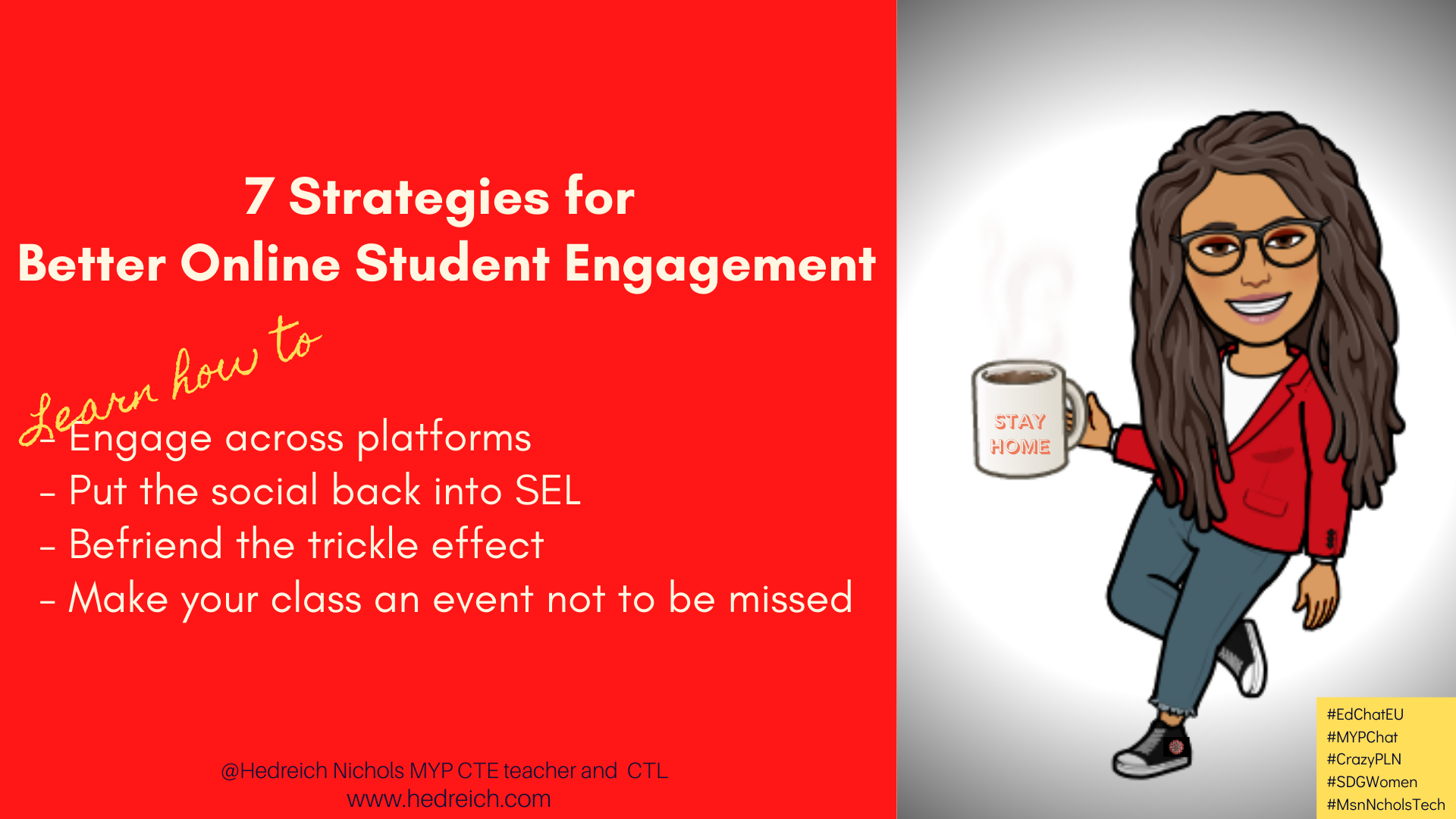
If you want to learn more about it, join me on Wednesday at 11AM (Texas time) for 7 Strategies for Better Online Student Engagement where we’ll talk about learning, engagement and connecting from a distance.

From a Distance Read More »

My Students Are Not All Okay

I am fortunate to work with a diverse group of really great educators. Some of them have backgrounds similar to my own. Others come from very diverse backgrounds which heightens our ability to tackle problems from all angles. Sometimes, those same differences are food for thought, providing impetus to greater action. When talking to one of my favorite colleagues recently about the equity issues involved in moving learning online, I felt the difference in our backgrounds like a punch in the gut and it brought me here.

I was raised in a single-parent-ish, multi-generational home, one generation out of Houston’s Third Ward public housing. My mom used every extra penny to give me upper middle class exposure. I traded on those experiences to travel the world, even living and teaching in Switzerland for a decade and a half. My circle is a colorful community of friends who sometimes live in very different socio-economic worlds. Although I am in the Venn diagram middle of those worlds, folks on the high earning end don’t always know what life on the other side looks like. I find myself regularly in a room in which people do not know that living paycheck to paycheck is a real thing, without label and latte habits. I have friends who are shocked when I say that 1 in 4 Americans makes less than 40K. Even my friends who work in the trenches to get their students everything they need sometimes don’t know what it’s like to not make rent or eat 2 corndogs a day until your paycheck comes in. My early career as an artist taught me some real lessons about hunger and the gig economy and I have not forgotten them. I ache for people who are about to sacrifice everything so that we can flatten the curve and I fear that we don’t see the urgency of those needs.

I am glad to be a voice that helps uncover equity and access issues that we may not be aware of, especially now, as we push to get our lessons online. I am glad that my background has taught me how to ask questions and get help, for myself, for others. I am glad that I can raise awareness about the precipice that some of our families live on the edge of. I am also afraid that being a voice is not enough.

Now that we are in an economy that is doing a nose dive for many who were already barely making ends meet, what does equity look like? As we work on connecting kids to learning, have we built strong enough relationships so that we can connect kids to resources that will meet their basic needs? Are we making sure that mental health resources, food pantries, rental assistance and community outreach resources are on our Reminds, campus email blasts and even Google Classroom feeds, where appropriate? Do our kids know how to access a suicide or abuse hotline? Can their parents read well enough to fill out complicated forms necessary to access resources that we do send? Do we have basic needs crisis teams on every campus to provide help and additional services?

My kids are not all ok. I’m pretty sure that most of them are, but I am not content with most. Still, I am lucky. I work with an incredible team of caring educators who go the extra mile. I know that, while I don’t know every name and every need, I can call 3 people right now and they can let me know where help is still needed. For that I am thankful.

My challenge this week is for you to slow down on your Zooms and Flipgrids. Talk about Maslow and mental health in your PDs. Make it a priority to check in with your students. Find out who’s alone all day, who is taking care of younger siblings, who is hiding in his room because he’s stressed or afraid. Find out who can’t do meal pick up because their mama’s car broke down. Find out who is not ok and then do something about it. And if your students are all ok, maybe your students or family can donate to a local food pantry or even #stayhome and volunteer online to help those who aren’t.

Here is a list of resources for families in crisis:

  1. COVID-19 Response for Youth Who Are Homeless or in Foster Care
  2. Find Your Local Food Bank
  3.  Disaster Distress Helpline
  4. National Suicide Prevention Lifeline 1-800-273-8255
  5. National Domestic Violence Hotline 1-800-799-7233
  6. Evictions and Foreclosure Moratoriums
  7. Salvation Army
  8. Pausing bills like mortgage, utilities and student loans
  9. E-filing back taxes quickly to get a stimulus check (more straightforward than the IRS site, but from the company Turbotax)

We won’t save every child in our classroom. We couldn’t when we were face to face and that hasn’t changed. But we can make sure that connecting with kids and helping the most vulnerable among us is a priority. For additional resources, see these earlier blog posts and to read up on equity strategies in general, consult my guest blog article on Jennifer Gonzalez’ Cult of Pedagogy.

My Students Are Not All Okay Read More »

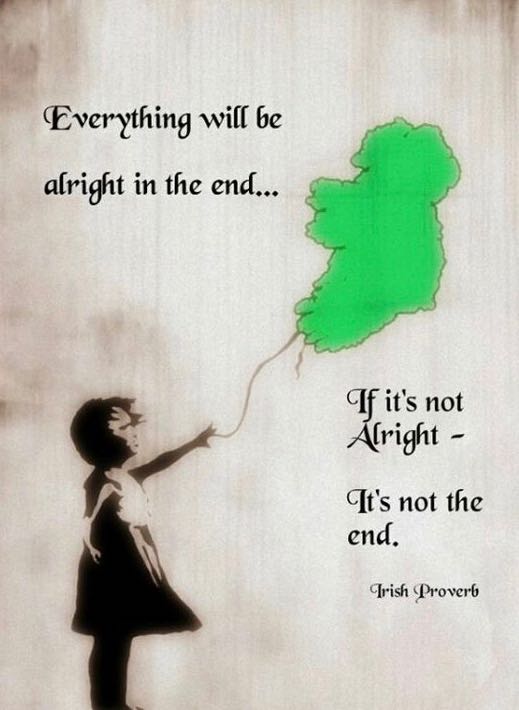
Everything’s Gonna Be Alright II

It’s so easy to be grateful when life is chugging along smoothly, less so when even the lemons you’re squeezing to make lemonade seem to be bitter and moldy.

I know. My brick house of gratitude is mortared with tears and I’m sorrys. “I’m sorry, your husband has cancer”. “I’m sorry, he didn’t make it”. “I’m sorry, we can’t find the baby’s heartbeat”. “I’m sorry your mom collapsed and died in therapy”. I know pain and loss intimately and still, I can write, with confidence, that everything is going to be alright. In addition to a deep and abiding faith that grounds me in the belief that there’s an ultimate OK coming, I have lived through losses and tragedies that should have stripped me of my sunny disposition long ago. I have trudged through bad weeks and months and sometimes years at a time but I’ve come out on the other end. While being dragged, kicking and screaming, up the steep hill of personal growth, I learned the two things that I wouldn’t trade for an easier path; resilience and gratitude. I learned to cling, sometimes desperately, to the belief that by simply putting one foot in front of the other I would arrive somewhere better. I learned to remind myself of even the smallest things to be thankful for. Those reminders kept a glimmer of hope burning. That glimmer of hope was fanned by doggedness and molded by alternating fits and starts of steps forward and leaps back. My “everything will be alright” is not the platitude of a charmed soul, proverbial spoiled rich girl or even someone who is unfailingly optimistic, although I do tend to find the upside. The fact is, once you pull yourself up a few times with “Nobody Here But Jesus” playing over and over as your soundtrack, you find out that you can pull it together and that life will not beat you, it’ll just teach you more than you’d ever planned on learning.

So while you’re reading this, in whatever state of mind you find yourself as we go through this unique, difficult Covid-19 adventure, I would like to remind you that everything will be alright. There will be loss, in some cases, unimaginable tragedy. But there will be rebuilding, recovery and somehow, a new and different alright-ness. In the mean time, hunker down, wash your hands, watch some Tiktok videos and help someone if you can.

My help this week comes from Action For Healthy Kids. Many thanks to the bloggers for collecting such a comprehensive list of resources for everything from online learning to fitness and immune boosting nutrition.

Everything’s Gonna Be Alright II Read More »

Every Little Thing’s Gonna Be Alright

Yesterday as I got to the 5th store on the third shopping day only to find shelves devoid of toilet paper, I decided to buy some emergency toilet Kleenex, get some pasta and call it a day. Once in line, I spontaneously started singing to a crying baby as the mom of 3 in front of me frantically searched for his binky. Baby Shark turned tears to smiles. People around looked up and relaxed their furrowed brows just briefly. A conversation started between the cashier and I; how the silliest songs work magic, how she hadn’t had a break all day, how I’d come in for toilet paper and found none. Again. Then more magic, she produced three packages confiscated from people trying to flout the “limit 2” rule. I took 2, Charmin, my favorite! I had come in, seven rolls between me and dry leaves and I had been spiraling. What if I really couldn’t find any? Would my neighbors share? What if we got the runs?! What if I never found toilet paper, even the cheap kind?! Fear was rising and then, *POOF*, I somehow had exactly what I needed. That taught me something.

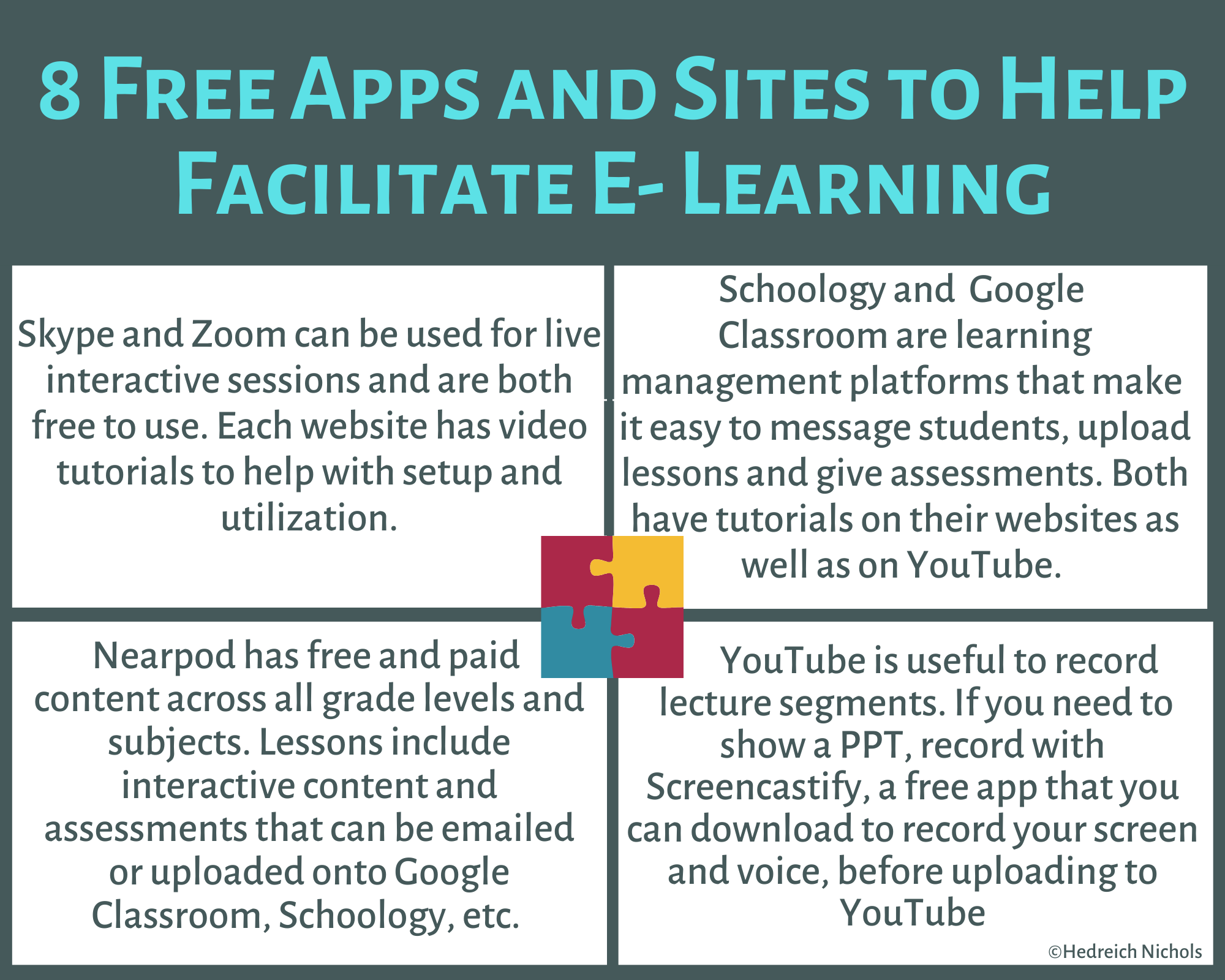
Things are rarely as perilous as they seem, “no soup is eaten as hot as it’s served”. We paint worst case scenarios to protect ourselves from worst case scenarios, and that preparation is not bad, let’s just not live there. Let’s take control of the things we can. For teachers, one thing we can control is how we stay connected with our students. If you are converting to distance learning, here are my top five resources, with tutorials and app alternates for non US users:

  1. Screencastify, K-12. Here is the tutorial for recording your voice and integrating Google Slides. Screencastify will record your screen with a voiceover so it’s a great gateway app if you want to make your own tutorials for parents or students. Before you do, check YouTube. There are many great tutorials already out there and many lessons that you may be just about to re-create. While littles won’t need Screencastify lessons, depending on what you’re having them do, it could be helpful for the parents helping them.
  2. Flipgrid, K-12+. Here’s a tutorial in which Ann will get you started and put you in a good mood. She is super upbeat! Once you get set up, you can use it for read-alouds, discussions, video journals and for various peer to peer exchanges during this time of relative isolation. It’s also a great alternative to TikTok for younger kids, if you want to do dance challenges together.
  3. Pixton, grades 3-12+. Here’s a tutorial that gets you started. Pixton is great for ELA, tech, humanities and even math, if you want to really get into word problems. It’s a comic strip creator that allows for a lot of creativity. It would be great to have kids write about how they feel about Covid19 and about how they feel the adults in their lives are handling it. I bet we could learn a few things from their stories.
  4. CS First, grades 5-8, which has interactive, interdisciplinary lessons on various topics, from basic coding and digital storytelling to music and fashion. There are lessons in both English and Spanish. Here are tutorials to get you started. If you are outside of the US, let me recommend Hour of Code, which has lessons in over 45 languages for students in pre-k through high school!
  5. Interland, grades 4-7. No tutorial here, just click and play to learn digital citizenship principles. This is Google based, so if you are out of the country, try Common Sense Education for K-12 digital literacy curriculum and games for grades 3-5. These lessons are especially useful as reminders, since many students will have more screen time than usual.

All of these are good options, and there are many more. My advice? Keep it simple. Send something out using your email or remind system if you don’t have an online classroom set up. Or, set one up. Google Classroom and Schoology are user friendly, free options. With them, share links to any resources in one place and even have students turn in their work by a certain time like in a real classroom. Also, really consider Flipgrid, YouTube, TikTok or a social media platform, as policies allow. Human contact is necessary and being a live, talking, steadying influence for your students will be the most important thing you can do for them.

Finally for some, no matter how great your virtual teaching is, this time will be a nightmare. Consider using your resources to help those who may need more than just an internet connection. Here are some national links that connect you to resources in local communities, I’m sure there are many others.

You may be the first person to sense that something is wrong and that’s a big responsibility. But I think most of us signed up because we genuinely care so let’s move from empathy to action when we see students in need.

Will things get worse before they get better? Maybe. Will people we know get the Coronavirus? Maybe. Will they recover? Maybe. There are a lot of maybes and a lot of factors that are beyond our control. But here’s a spin: as chaotic as things are, we are also alive and living through something unique and unprecedented. That ain’t all bad, is it? You can teach in your jammies and send YouTube videos to your students of you and your dog explaining math. How cool is that? You can try your best to do a TikTok dance, give your kids a Cheerio tower challenge on Flipgrid, or send snail mail notes to ss who are not connected filled with love and message in a bottle challenges. Help your students to see adventure and the chance to problem solve in everything that’s happening. It won’t always be possible, but your calming voice can be the one to remind them that everything will indeed be alright.

Every Little Thing’s Gonna Be Alright Read More »