
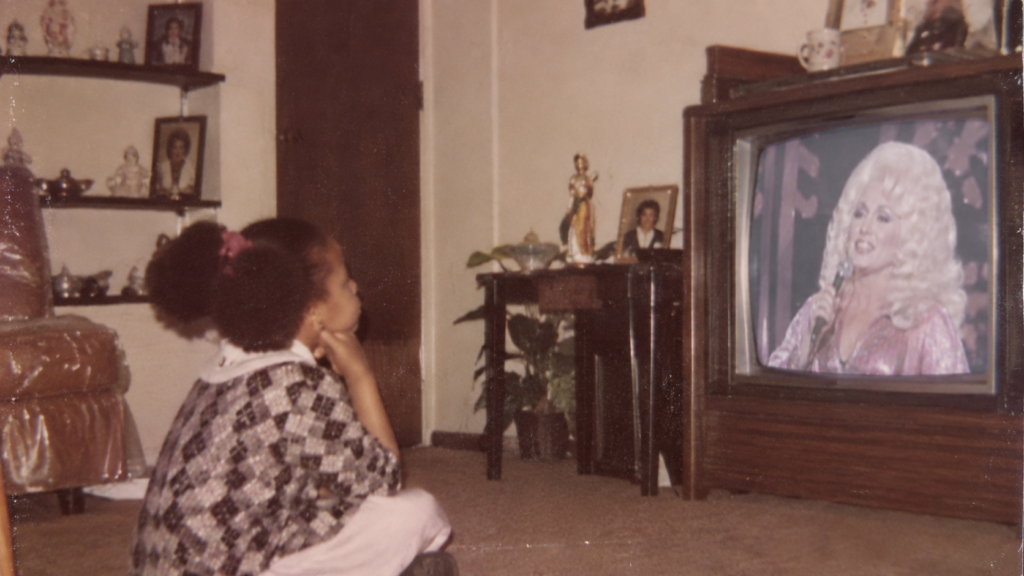
Would We Have Loved Dolly Parton Before She Was Dolly?
“OMG, who is that?”
“Lookin’ like she came in straight from the streets!”
“Shameful, looking like that in the Lord’s house.”
“Bless her heaaarrrrt”
And if it was in any of the churches I could worship in as a little Black girl…
“Hmpf. She must be up in here trying to get one of our men. Her weight in the wrong place tho. All coming, nothing going.”
“She is kinda cute when she smiles though. Dimples. She just needs to take off some of that makeup and cut down them fake ass nails. OOPS, made me cuss in church.”
What if she was a registered sub on our campus?
“No she didn’t show up like that at a school!”
“She think this is Vegas? Or worse??”
“Ma’am, our administrator needs to have a word.”
And yet. Flags at half-mast. Tributes and interviews from every industry. Her songs and quotes trending sounds on social media platforms, used by gays and Christians alike.
But what if Dolly, unknown as the star we all came to love, had walked into our church, our school, or our neighborhood? Let’s not pretend she would have been the girl we all wanted to have coffee with, the one we thought would be perfect to head up the Ladies’ Tea committee.
We would have looked at her ostentatious makeup and long nails and assumed things.
She’s a loose woman. A trollop. Fast. Hot. Thirsty. She has zero style, she’s cheap, uncultured, and probably dumb as rocks if she has to pimp herself out like that. Did I cover all generations?
And what the aitch ee double ell is up with those oversized fake boobs??
Bleached Blonde Hair and Blind Spots
Let’s not pretend that we would have seen her as the multiple-income-stream poster child worth $450–$460 million, with her fingers picking not only guitars and banjos, but winners in industries across entertainment, farming, fashion, real estate, and more. Even with that sweet voice, we could not have predicted she’d be someone who would write over 3,000 songs worth $6–$8 million in royalties every year. We would never have guessed that she would have the moxie to refuse to give up publishing rights to Elvis, and that that one decision would go on to earn her $10–$20 million alone from Whitney’s cover of I Will Always Love You.
The local gossips, while trashing her clothes and makeup, would never have thought that the bleached blonde in a cheap wig (Dolly’s words, actually) would give away millions and millions of dollars, just because that is who she was.
And “millions and millions” isn’t hyperbole. We all know about her giving away books (roughly 3.5 million monthly, btw). But Dolly ain’t new to this, she’s true to this.
Back in 1988, when one in three kids in her home county were dropping out of school, she told the eighth graders to buddy up. If you and your buddy both made it all the way through high school, Dolly herself would hand each of you a $500 check. The dropout rate reportedly went down to 6%.
Then there are the people working at Dollywood. Full-time, part-time, seasonal, it didn’t matter. In 2022, the company told employees who wanted to continue their education that they would get 100% of their tuition, fees, and books covered. Imagine being the person somebody dismissed as the tacky blonde with the boobs and the nails, turning around and making sure the teenager selling funnel cakes at your theme park could go to college for free.
Teachers get some Dolly love too. Her Chasing Rainbows Award annually celebrates a teacher who has pushed through personal obstacles while still managing to change children’s lives. And they don’t just get a plaque in the mail. The honoree gets an all-expenses-paid trip to Dollywood to celebrate and be celebrated.
All that from the woman we might have taken one look at and decided lacked class. Turns out, maybe we were looking for class in the wrong places.
What Dolly Can Teach Us About Perception
And there’s an educator question buried in all of this too. When we look around our classrooms, campuses, and staff meetings, how often are we responding to what we actually see, and how often are we responding to the story we’ve attached to it? How quickly do we mistake our interpretation of a person for information about that person? Clothes become “doesn’t care.” Quiet becomes “doesn’t know.” Loud becomes “disrespectful.” Poor becomes “unmotivated.” Nails, lashes, dialect, politics, gender presentation, whatever; we see something, attach a story to it, and then respond to the story as though it’s evidence.
Everybody doesn’t have Dolly’s confidence. Let’s face it, most of us don’t. And it’s hard to feel safe with people when you can feel their judgment before you ever hear it. So for those who remember the old WWJD T-shirts from the ’90s, I keep coming back to WWDD. What would Dolly do? Not because Dolly was Jesus, but:
Would Dolly need someone to believe like her, vote like her, worship like her, love like her, or look like her before deciding they were worth making room for?
From everything I’ve read about her, apparently not, and maybe that’s why I’ve been thinking about Dolly so much. Not because she died beloved by all. But because she lived loving all people.
Would We Have Loved Dolly Parton Before She Was Dolly? Read More »